Build and Manage Your Transport Company
Transport Fever 3 is a transport management game from Urban Games, where you build routes to carry people and cargo between towns and industries. You manage the vehicles, infrastructure and costs behind those connections, with profit and growth as your goals. Your network spans road, rail, sea and air.
The core challenge is balancing delivery income against the expense of running the network. Deliveries bring in money, while vehicles and infrastructure add costs, so expansion also gives you more expenses to manage. As cities develop and their needs become harder to satisfy, you need to revisit routes instead of treating your opening layout as permanent.
Connect Towns and Industries
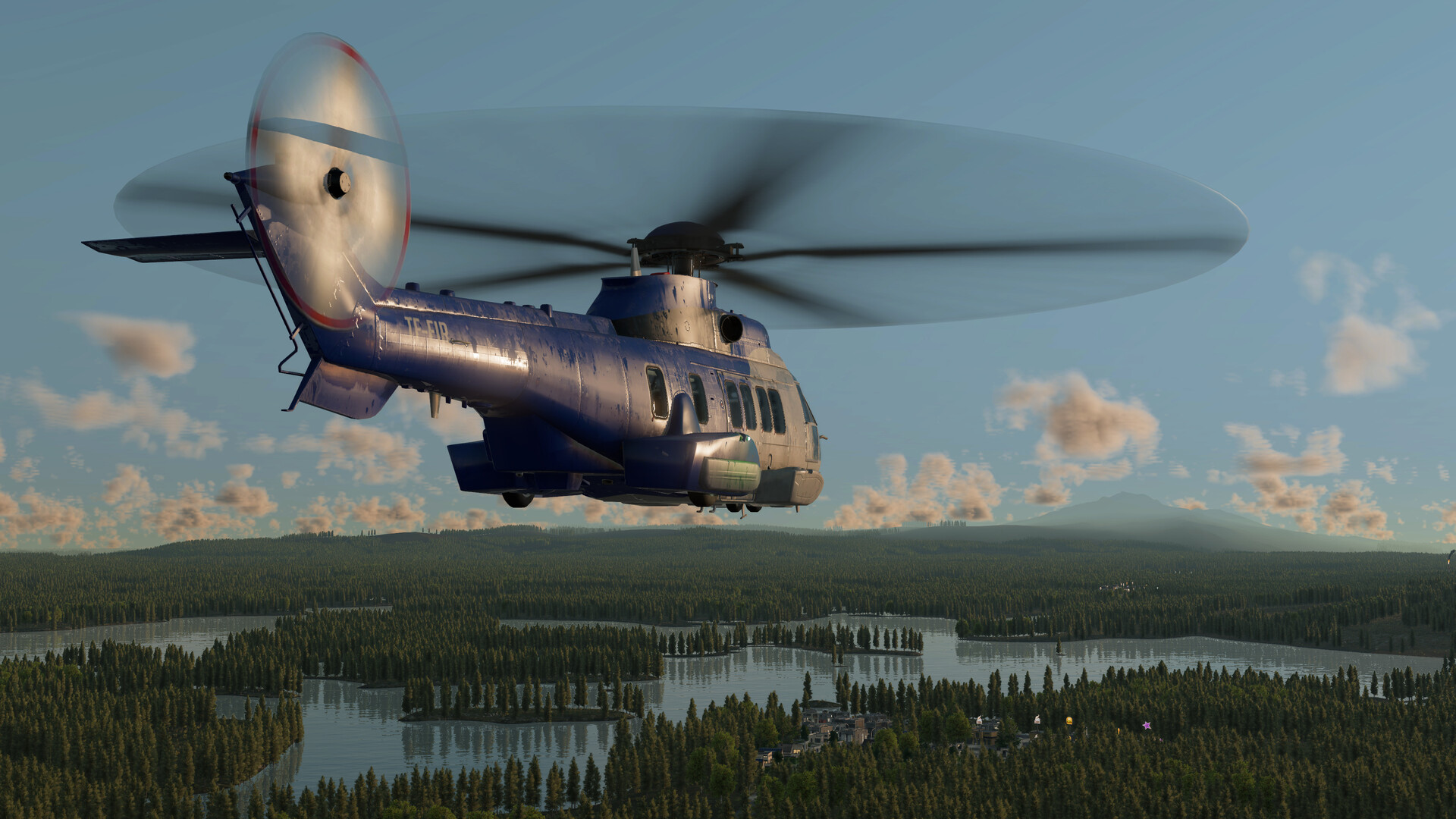
Trains, buses, trams and trucks handle land transport, while ships, aircraft and helicopters extend the network across water and through the air. Light rail and dedicated cargo trams are also supported. Start with the connection you want to make, then consider which transport mode suits that job.
Your routes serve people as well as freight. Citizens have homes, jobs and places to visit, while industries operate both onshore and offshore. Connecting towns and industries supports their growth, so route planning also shapes the places your company serves.
Freight planning goes beyond drawing a link between destinations. Cargo controls cover loading and unloading, with warehouses and specialized terminals providing intermediate storage. If moving freight is your main concern, choose the cargo guide for a closer look at those systems.
Make Routes Earn Their Keep
Fleet management means balancing maintenance costs, efficiency and service priorities. You also need to resolve bottlenecks and respond to changing demand. Before extending a route or adding vehicles, consider whether the existing connection needs an efficiency improvement or an infrastructure upgrade.
Data layers and visual displays help you identify traffic hotspots, delivery problems, noise and pollution. Traffic tools include lane control and configurable lane connections. Use that information to identify the problem you want to solve before committing to a wider expansion.
Successful routes provide the money to extend your reach, and progression can earn you the right to construct landmarks. Growing cities bring more challenging needs, so network planning remains an ongoing job. Let demand guide your upgrade decisions, and keep the cost of serving that demand in view.
Choose the Way You Want to Play
Tycoon mode offers the transport business challenge with adjustable difficulty. Campaign mode features missions inspired by historic events. Sandbox mode supports creative building, and you can disable the economy to concentrate on constructing cities, stations or dioramas.
For a business-focused start, choose the tycoon guide to explore the challenge you want to set yourself. Choose the campaign guide if you prefer transport problems framed as missions. If creating your own setting is the attraction, the in-game map editor and mod browser offer further ways to shape your world.
Choose Your Next Guide
- Choose the release guide for launch and storefront questions; it helps you focus on availability for the platform you want to use.
- Choose the Deluxe Edition guide when comparing editions; it keeps your next reading focused on additional content before you decide what to buy.
- Choose the system requirements guide for computer compatibility questions; use it to compare your operating system, processor, graphics, memory and storage with the requirements.
- Choose the cargo guide for loading, unloading and storage questions; it focuses your reading on the freight systems behind an industrial connection.
- Choose the cities guide when town development is your priority; it directs your attention to growth, inhabitants and the connections serving their needs.
- Choose the rail signals guide for signalling questions; it keeps your next reading focused on the railway topic you want to understand.
- Choose the campaign or tycoon mode guide according to your goal; historic missions and an adjustable business challenge call for different starting points.
- Choose the mods guide when you want to expand your collection of creations; the in-game mod browser provides a way to discover and share content.
Release, Aircraft and Map Questions
- Is Transport Fever 3 released, and where can I buy it now?
- Yes, Transport Fever 3 was released on September 29, 2026. It is available for PC, macOS and Linux through Steam, the Epic Games Store and GOG, and for PlayStation 5 and Xbox Series X|S. The official buy page lets you select an edition and storefront.
- Can I build air routes as well as railways?
- Yes, aircraft and helicopters are part of the vehicle range. Airways sit alongside roads, rails and sea routes in your transport network. Vehicle progression includes jet planes, so aviation is part of the broader transport system you can develop.
- How do maps affect transport planning?
- Randomly generated maps feature distinct biomes with different gameplay challenges. The four climate zones bring settings ranging from temperate valleys and subarctic swamps to desert plains and tropical islands. Each calls for a fresh approach to your transport strategy.